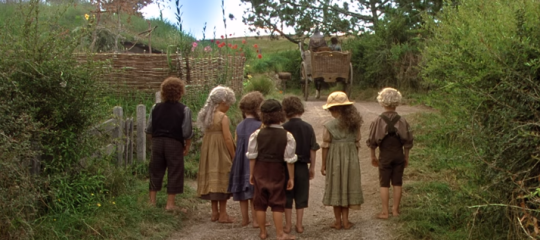
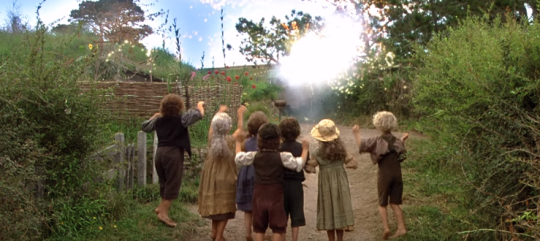
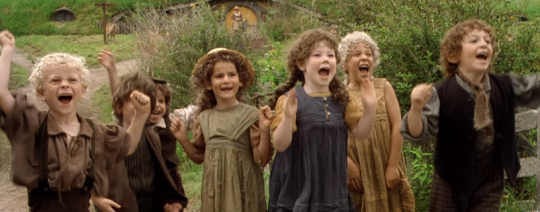
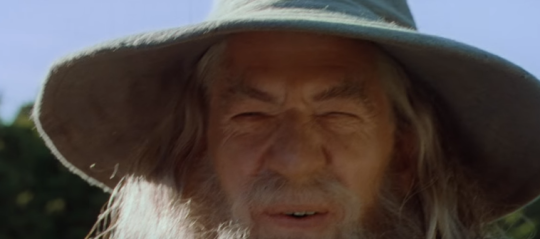
aight fuckers I’m doing it I’m spending a full $4 to watch the first lotr movie, for the first time
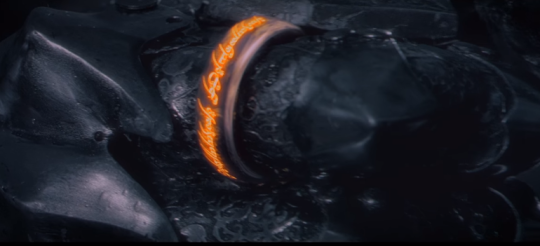
so like I get, you know, power and malice and cruelty were ‘poured’ into the rings, but like. what did they actually put in those things. what fuckin gold gives a ring malice. why did the elves only get three.
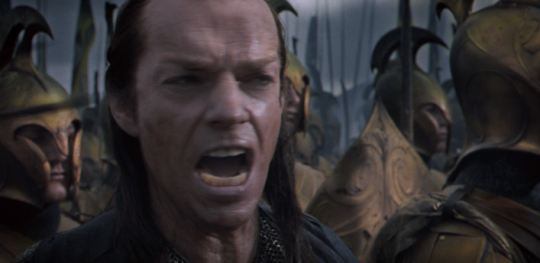
holy shit it’s Agent Smith with pointy ears
this ring was made of weet-bix and nutri grain
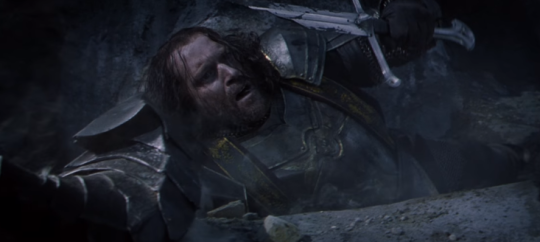
it was in this moment, when all hope was lost, that issieldor-whoever took up his father’s sword –
I’M SORRY BUT I’M LAUGHING THE RING GIVES THE BIG BAD GUY LIKE DARK MAGIC AND A DEMON ARMY TO CONTROL BUT EESEELDOOR PUTS IT ON AND HE JUST TURNS INVISIBLE
holy shit I just experienced seven and a half minutes of introductory exposition by a mysterious lady who apparently thinks VERY little of hobbits
omg is this WHOLE movie exposition
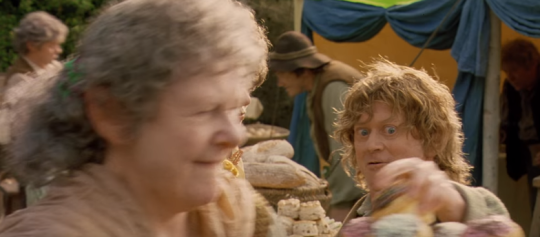
it has been remarked by some that a hobbit’s only real passion
is for food
FOOD
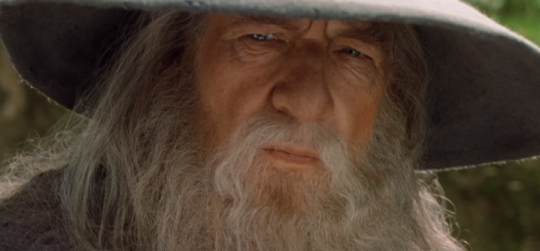
a wizard is never late
says Ian McKellan, wishing he was Julie Andrews, Queen of Genovia
I know absolutely nothing about either of these two but I already fucking love their relationship it’s beautiful
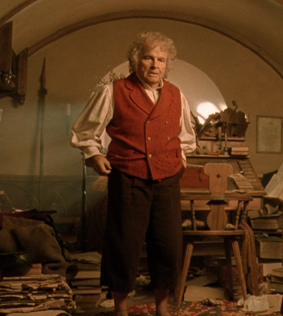
OH SO BILBO’S THE FUCK THAT CAUSED ALL THOSE JUMP SCARES
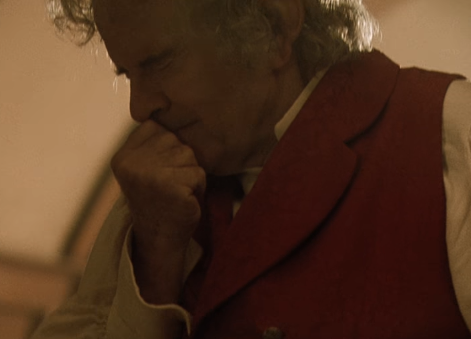
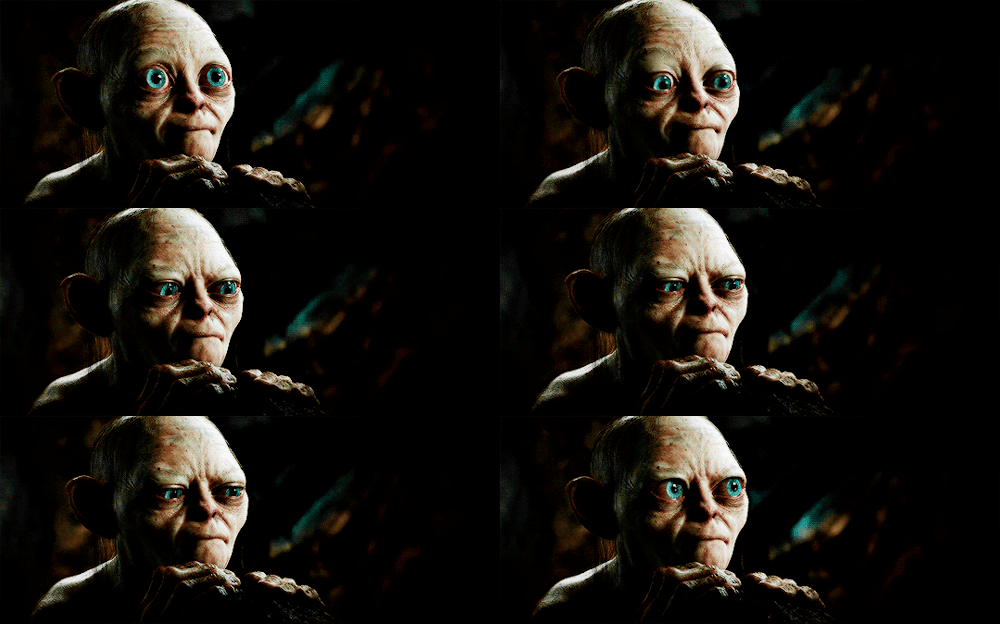
oh shit son he’s got the ring and the golem voice
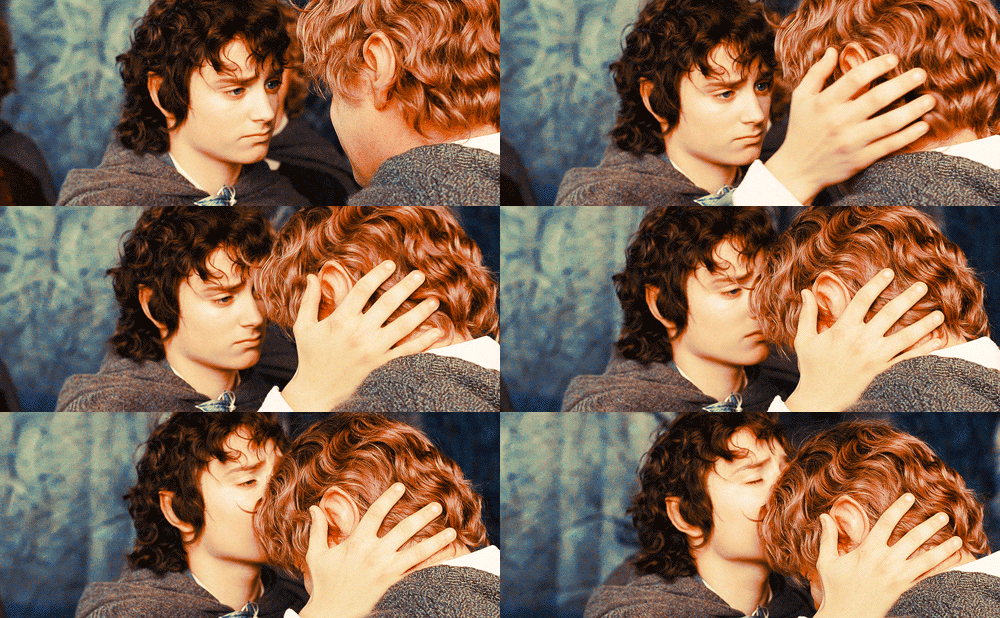
okay so that’s pretty fucking cute
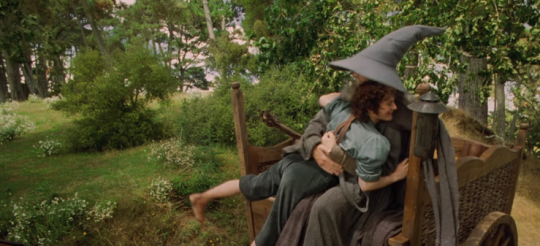
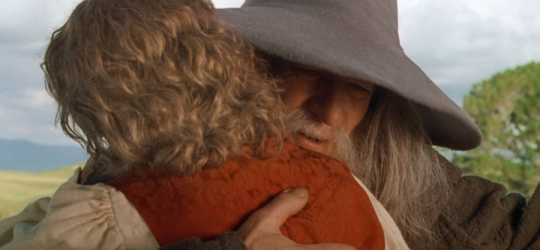
apparently every hobbit has an instinctual urge to hug Ian McKellen and honestly? same
holy shit guys I’m not even 20 minutes in I’m gonna have to make multiple posts
Art Credit:@nevui-penim-miruvorrr – THANK YOU for allowing me to use your wonderful art ❤ Turgon’s two cards can be entirely blamed on @magpiescholar – thank you for the ideas.
also, I am terribly sorry Argon, but that is how half the fandom feels about you
Here are some useful resources I’ve found while I’ve been in the community, so I thought I’d share! PLEASE ADD YOUR OWN IF YOU HAVE ANY! And please reblog and share!
References
askmiddlearth – A great blog where you can send in questions and receive answers regarding just about any aspect of the Legendarium.
coco.raceme – A collection of quotes, songs, and important passages from The Hobbit and The Lord of the Rings, arranged by book and chapter.
Fish in Middle Earth – Did you ever want to know what kinds of fish there were in Middle Earth? No? You’ll probably end up reading this anyways. The curiosity will get to you.
henneth-annun – The HASA story archive has mostly moved to AO3 now, but this website still contains hundreds of timelines, character bios, quotes, object descriptions, and more.
silmarillionwritersguild – Essays, meta, biographies, and more – all about the plot and characters of the Silmarillion.
Languages
almare – Tumblr user almare has a great collection of Tolkien language resources, including a handy graphic of the relations between Elvish languages.
councilofelrond – A good resource for translations of canon texts, glossaries, conlang discussions, a dictionary, etc. Of particular interest is their Sindarin mutation chart, which is necessary pretty much whenever you’re stringing more than two Sindarin words together.
Hiswelókë’s – A delightfully thorough dictionary available in a variety of arrangements ( English-Sindarin, Sindarin-English, thematic, etc. ). Available in English, French, and German.
midgardsmal – The blog of David Salo, one of the people who worked on the languages in Peter Jackson’s Tolkien films.
realelvish – A handy phrasebook that provides categories for easy searches, dialects, pronunciation, and multiple translations of the same phrase. Includes fun categories, such as ‘in the bedroom’ and ‘on the internet’, as well as many others that are more in keeping with Tolkien’s tone.
sindarinlessons – A collection of rules, references, and explanations of Sindarin grammar.
your-sindarin-textbook – On this site, a duck teaches you Sindarin. What more could you want? Includes exercises and references.
Books
All the books in PDF – These two posts both contain links to Tolkien’s works and where you can find them online.
HoME reading order – tumblr user lintamande has put together a list of Tolkien’s texts beyond the Silmarillion, in case you were wanting to dip your toes into HoME but didn’t know where to begin. They also have a general Silm resource page that’s worth looking at, as well as all their meta.
Tolkien’s letters – A collection of many of Tolkien’s transcribed letters, useful for all those really obscure facts you need to check and to impress your friends.
Non-Tolkien
A shameless plug– I do my best to collect useful references, notes, and masterposts on writing, Tolkien, and more in my ‘references’ tag.
howtofightwrite– This blog contains discussions on weapons and how they’re used, as well as some particularly useful weapon primers that will give you the basics on the weapons your character uses.
Medieval references – A collection of a few useful references for medieval-type jobs, terms, and more.
Mood music – Themed music playlists for just about anything you could ever want to write.
Traveling – The methods of traveling in the Middle Ages, and the time it would require.
Adding links for the Lord of the Rings Family Project, which has the best set of genealogies hands down and I constantly reference it.
Ardalambion is a high quality language resource and has extensive wordlists. Good for obscure languages like Nandorin and Taliska. It’s more in-depth than a dictionary and has notes on in-universe and out-universe history for the languages.
Textual Ghosts Project, a list of unnamed and missing female characters from Tolkien’s works.
Notes: some of the book links don’t work any more.
The working link for OP’s resources tag is now here.
This is really useful! Thanks to OP for collecting these! (I totally looked at the fish essay.)
There is some good stuff here. I’d add to it though that if you want books ABOUT Tolkien, Tom Shippey is well worth a read: particularly The Road to Middle-earth: How J. R. R. Tolkien Created a New Mythology and J. R. R. Tolkien: Author of the Century.
Shippey is not just a biographer, like Humphrey Carpenter, he is a fan, and a major expert in Old English and Medieval writing, so he really understands Tolkien on a level that I don’t think many people who write about him do. Furthermore, the man can write truly entertainingly and absolutely isn’t the least bit embarrassed about being a fan of a ‘genre writer’.
(Please buy or borrow his books properly from a library so he gets paid for them: don’t pirate them!)
Most composers spend just 10-12ish weeks working on a film’s music. John Williams spent around 14 weeks on each Star Wars movie, 40ish weeks total for the whole OT……but composing the LOTR trilogy’s soundtrack took four years
The vocals you hear in the soundtrack are usually in one of Tolkien’s languages (esp. Elvish). The English translations of the lyrics are all poems, or quotes from the book, or occasionally even quotes from other parts of the films that are relevant to the scene
When there were no finished scenes for him to score, Howard Shore would develop musical themes inspired by the scripts or passages from the book. That’s how he got all Middle-Earth locations have their own unique sound: he was able to compose drafts of “what Gondor would sound like” and “what Lorien would sound like” long before any scenes in those places were filmed
Shore has said his favorite parts to score were always the little heartfelt moments between Frodo and Sam
Shore wrote over 100 unique leitmotifs/musical themes to represent specific people, places, and things in Middle Earth (over 160 if you count The Hobbit)
The ones we all talk about are the Fellowship theme, the main Shire Theme, and the themes for places like Gondor, Mordor, Rohan, and Rivendell…but a lot of the more subtle ones get overlooked and underappreciated
Like Aragorn’s theme. It’s a lot less “obvious” than the others because, like Aragorn himself, it adapts to take on the color of whatever place Aragorn is in: it’s played on dramatic broody stringed instruments in Bree, on horns in battle scenes, softly on the flute with Arwen in Rivendell….
Eowyn has not just one but three different leitmotifs to represent her
Gollum and Smeagol both have their own leitmotifs! Whose theme music is playing in the scene can often tell you whether the Gollum or Smeagol side is “winning” at the moment
The melody for Gollum’s Song in the end credits of the The Two Towers is the Smeagol and Gollum themes smushed together (it’s Symbolic)
And then there’s the really obscure ones. Like there’s a melody that plays at Boromir’s death that shows up again in ROTK in scenes that foreshadow a major death or loss
Shore wanted the theme music to grow alongside the characters– so that as the characters changed, their theme music would change with them.
You can hear that most clearly in the Shire theme. Like the hobbits, it goes through A Lot
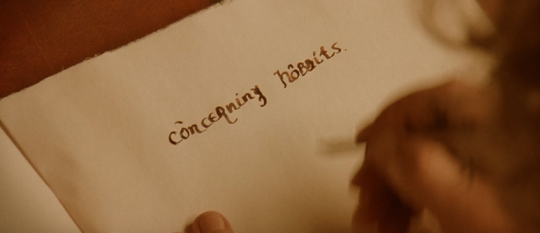
Like compare the childish lil penny whistle theme you hear in Concerning Hobbits/the beginning of FOTR with (throws a dart at random Beautiful Tragic Hobbit Character Development scene because there WAY TOO MANY to choose from) the scene when Pippin finds Merry on the battlefield, where you hear a kind of shattered and broken but more mature version of that same theme in the background
I could write you a book on how much I love the way the Shire theme grows across the course of these films
Unlike the hero’s themes, which constantly change and grow, the villain’s themes (The One Ring theme, the Isengard theme, etc) remain basically the same from the very beginning of FOTR to the end of ROTK. Shore said this was an intentional choice: to emphasize that evil is static, while good is capable of change
Shore has said that between all the music that made into the movies and the music that didn’t, he composed enough for “a month of continuous listening”……..where can I sign up
shoutout to that time i got stuck in a floating glitch on lotro
what she means: the words “christmas tree” are used in the hobbit, and since we know that bilbo is the author of the hobbit, hobbits must have christmas which means there must be a middle earth jesus. but hobbits seem to be the only ones who have the concept of christmas which means it was probably a hobbit jesus. but frodo says in return of the king that no hobbit has ever intentionally harmed another hobbit so who crucified hobbit jesus?? were there other hobbit incarnations of religious figures?? was there hobbit moses?? did jrr tolkien even think about this at all??
Wait wait I might actually have an answer
Tolkien wrote The Hobbit like waaaay before he even dreamed up the idea for Lord of the Rings, so when he DID dream up LotR, he had a whole bunch of stuff that didn’t make sense. Like plotholes galore
Like for example in the first version Gollum was a pretty nice dude who lost the riddle contest graciously and gave Bilbo the ring as a legit present and was very helpful and it was super nice and polite and absolutely nobody tried to eat anyone because this is a story for kids and that’s very rude
But that doesn’t work with LotR, so Tolkien went back and re-released an updated version of The Hobbit with all the lore changes and stuff to fix everything that didn’t work
This is the version we know and love today
BUT rather than pretend the early version never existed, Tolkien went and worked the retcon into the lore
If you pay attention in Fellowship, there’s a bit where Gandalf is telling Frodo about the ring and he mentions how Bilbo wasn’t entirely honest about the manner in which it was found
To us modern readers, this doesn’t make a ton of sense, so mostly we just breeze by it–but actually that line is referencing the first version of The Hobbit
The pre-retcon version of the Hobbit is canonically Bilbo’s original book. The original version with Nice Gollum is canonically a lie Bilbo told to legitimize his claim to the ring and absolve him of the guilt he feels for his rather shady behavior
Then the post-retcon version is an in-universe edited edition someone went and released later to straighten out Bilbo’s lies
So it’s 100% plausible that the in-universe editor who fixed up Bilbo’s Red Book and translated it from whatever language Hobbits speak was a human who knew about Christmas Trees and tossed the detail in to make human readers feel more at home, because that’s the kind of thing that sometimes happens when you have a translator editor person dressing up a story for an audience that doesn’t know the exact cultural context in which the original story was written
Tolkien was a medieval scholar and medieval stories are rife with that sort of thing, so like… yeah
Not only all that, but Tolkien was also working within a frame narrative that he wasn’t the real author, but a translator of older manuscripts; so, in-universe, the published The Hobbit isn’t actually Bilbo’s book, but rather Tolkien’s copy of an older copy of an older copy of an older copy of Bilbo’s book. So when errors and anachronisms came up, he would leave them there instead of fixing them, and he may have even put some in intentionally; what we’re supposed to get from the “Christmas tree” bit is that the first scribe to translate the book from Westroni to English couldn’t come up with an accurate analogue for whatever hobbits do at midwinter.
Yes. Another example of tolkien doing this is him using, for instance, Old High Gothic to represent Rohirric – not because the people of Rohan actually spoke that language, but because Old High Gothic had the same relationship with English that Rohirric had with Westron (Which is the Common Language spoken in the West of Middle-Earth). There’s tons of that stuff in the book.
Like, Merry and Pippin’s real names (In Westron) are Kalimac Brandagamba and Razanur Tûk, respectively (to pick just one example of this). Tolkien changed their names in English to names which would give us English-speakers the same kind of feeling as those names would to a Westron-speaker. Lord of the Rings is so much deeper than most readers realise.
tolkein’s entire oevre is just one epic in-joke with the oxford linguistics department imo
One of the things in Tolkien’s works I will be forever disappointed in is the seduction of Mairon.
I mean, this guy is scarily loyal to his master, even when his master is no longer there; morever, he is genuinely evil. This is the guy that caused the fall of Numenor for the sole purpose of a chance to save his former master, and then laughed as the entire island descended into the sea. This is the guy that managed to convince the Numenorians to make a church for Melkor and make human sacrifices of their own people there. Granted, the Numenorians were already leaning towards their fall all by themselves and someone could argue that all Sauron did was give them a push.
But seriously how can the descendant of the great kings think that human sacrifices, proposed by a very powerful Dark Lord, could ever be a good idea?
Anyway, my point is that Sauron went to unbelievable lengths to bring Melkor back, because he was that loyal to him. In stories,usually when you have an all powerful Dark Lord and his lieutenant, the lieutnant is trying to do everything to get rid of his master and take his throne kind of like with kings and their advisors, Numenor anyone?
But not Sauron.
Sauron tries to bring his master back. Why? Because he’s evil, and because he’s loyal to the point of damnation. He practically died at the fall of Numenor.
So what happened? Was Melkor really just that attractive and persuative? Loyalty seems to be the very definition of Sauron/Mairon, so what happened in Almaren while he was in the service of Aule that made him change sides so completely?What was it?
Most heroes in Tolkien’s legendarium are motivated by the same thing – it comes back to love in one form or another. Fingon loves Maedhros. Lúthien loves Beren. Frodo loves the Shire. Sam, Merry, and Pippin love Frodo. For love, people will dare the impossible. They will risk their own bodies and lives.
Sauron may be evil, but that doesn’t mean he can’t love. In going to unbelievable lengths to bring Melkor back, he’s doing exactly what we see the heroes do. If he had been doing it for anyone but Morgoth, we’d be cheering him on.
This. Absolutely this.
And he’s such a fascinating character for it.
I can’t stop thinking about the ‘Grond’ scene in the LoTR movies. That’s a perfect example of Sauron’s loyalty to his master. The way those orcs chanted the battering ram’s name as it was brought into battle always gives me goosebumps. It had the precise effect Sauron wished for: it evoked the memory of Melkor’s own ancient weapon, striking fear and terror into the hearts of the enemies.
And can we take a moment to appreciate Ian McKellen’s performance in that particular scene? Gandalf knows who Grond was and what happened when Morgoth wielded it in battle, so the look on his face upon hearing that name is pure gold.
And also, Melkor offered Mairon power. He made him lieutenant. Second in command. Protege. That’s a big deal. And to someone whose name means “admirable” and who longs to see his ideas come to life, this is important. Melkor was Mairon’s master, but he allowed Mairon to make choices and act and have a say (we know that Sauron had a part in all Melkor’s works and we see him running his own area in the whole Beren and Luthien story). Under Aule, Mairon was just a single cog who had to do what he was told. Naturally, Mairon being who he is, he chafed under that.
It isn’t all explicit in canon, but I think there are a lot of things you can figure out from what we see of the characters in canon. We know some things about who Mairon is and also who Melkor is. We know things about their relationship. We can extrapolate from there (though different people may take it in different directions). For me, it is pretty clear that Melkor shared power with Mairon and that Mairon was the one most like him. It is also clear to me that Mairon enjoyed evil. Once he switched sides, he was happy in everything he did. So that can’t have come out of nowhere. Melkor must have seen something in Mairon that spoke to him.
I think I realized why Sauron works as a villain, at least for me.
Sauron is often seen as the prototypical example of the Dark Lord, the excruciatingly boring stock villain of classic high fantasy. He’s the dark component of a reductive black-and-white morality. He sits in a tower and wants to conquer and/or destroy everything. His tools, his servants, his lands are all foul, ugly, barren and evil. No real motivation, no personality to speak of. (Especially in contrast to the secondary villains and anti-villains in LOTR, who all have their stories and all but overflow with personality.)
Real Tolkien buffs, the ones who are buffer than me, will tell you that Sauron has an incredibly complex backstory, mostly contained in the Silmarillion, with bits and pieces all over Tolkien’s writings. Sauron has led a long and complicated life, going by various names and identities, serving evils greater than himself, getting destroyed but surviving multiple times, doing evil, repenting, faking repentance, doing evil again, going native in various ancient civilizations then contributing to their destruction, etc. If you read all the supplementary material, piece it together and fill the gaps with your imagination, Sauron is a noble, interesting, complex villain.
Very little of that comes through in LOTR itself, but I think it doesn’t need to. I think Sauron functions as a fantastic villain in LOTR exactly because we know so very little about him. Sauron has no POV chapter, except for a few paragraphs, and no POV characters ever encounter Sauron in a direct and comprehensible way. He mostly acts through proxy, his captains make war for him, his proxies speak for him. The reader never feels that his characterization is insufficient, because he *has no characterization*, he’s too far away and too high up, unknowable. Mostly Sauron is spoken of in the abstract, as the ‘enemy’, as the cause of evil, not as a specific evil person to be defeated. After all, it’s pretty clear he cannot be defeated, not in person. And when someone has a real and somewhat more direct encounter with Sauron, either via a palantír or in a vision, Sauron is too powerful to register as an individual person: he is an eye, a flame, a force, a will, a seeking attention. He is too big and too close to see as a whole, he is in your head, intruding, terrible.
So the narrative places Sauron in a context where he is either a distant menace, or an immense, incomprehensible mindfuck. Although he feels emotions such as wrath or fear, and he makes cunning stratagems, he doesn’t read as a strong clever evil person, he mostly reads as a force, as sheer power that only seeks more power. And on the whole, I feel that he *is* just that: not a person, but a power-hunger itself. It is stated in text that he’s a diminished, weakened, wounded version of himself, that during his different attempts (and failures) to subjugate others, he kept losing parts of himself, first his ability to assume a pleasing form, then to embody himself at all. I get the implication that he used to be a complicated entire whole person, and his struggle for power slowly eroded him, sanding off quirks and traits and individuality, costing him his patience for beautiful craft and his interest in beautiful languages, until he could no longer even pretend to be a fellow-person and not a *power*. Until he became an creature made of, and by, his own power. He was a person but power ate him and now he’s gone: this is the threat and the lure of the ring, which Sauron made of, and for, himself. Interactions with the ring are the closest thing we come to genuine interactions with Sauron, or to insights into Sauron’s mind – and interactions with the ring are uniformly horrifying, except maybe the one time Sam is small enough and kind enough to laugh it off. And seeing that, it’s clear that the ring needs to be destroyed, and Sauron’s power needs to be destroyed, for Sauron’s sake too. Only when he’s cut off from his power can his lost houseless spirit find its way through, to redemption or even just to rest.
TLDR: I don’t usually dislike villains who seem to seek power for power’s sake, but Sauron feels like a fantastic deconstruction of that: after all, LOTR is mostly about the risk of individual people becoming corrupted by power and becoming the vehicle of mere power-seeking-power-for-power’s-sake, and Sauron is someone to whom that already happened.
Fëanor’s obsession with preserving his mother’s name reads pretty easily to me as stemming from his need to be in control of his mother’s legacy, and, consequentially, how he himself is perceived.
Míriel’s death and refusal to be reembodied, and Finwë’s subsequent remarriage, were highly publicized events in Valinor when they really ought to have been private – both because Finwë is king and his family life is always exposed to the public gaze, and because the situation with Míriel, Finwë, and Indis is completely unprecedented. No one has ever died or been remarried in Valinor, and the societal rules about this are so strict that the Valar feel the need to debate whether this is even permissible. As such, the situation must have been highly controversial among the Noldor – in the text, it’s presented as though Fëanor is the only one to object to his father marrying Indis, but in reality there must have been many supporters of Míriel who saw the marriage as an insult to their first queen.
On the flip side, there ought to have been a fair amount of people who placed the blame for the situation on Míriel. A society in which there was no death wouldn’t be very well equipped to deal with suicidality, and there must have been a fair amount of sentiment floating around claiming that Míriel was selfish, or weak, or an unfit mother and wife. But mentions of Míriel grew more and more taboo as the time passed. The concept of death in paradise makes people uncomfortable, and most people were content to smooth the situation over by pretending that Míriel had never existed – or that if she had, she was a brief stain on the king’s life, a rather embarrassing detail, like a mad wife in the attic.
So Fëanor grows up in a society in which the circumstances of his mother’s death – a source of significant trauma to him – are considered public property, and open to whisperings and speculations. On top of that, he grows up in a mixed household with children from two marriages – a complicated enough set-up in our world, and even more so in a society in which this kind of familial structure is completely unheard of. He understandably perceives his father and Indis raising a nuclear family as a denial of his mother’s existence of significance. And he knows that his mother died because his birth drained her of her energy and will to live, and feels a massive amount of guilt because of it. He fiercely dedicates himself to being the best he can be because he feels that the onus on is on him to make his mother’s death meaningful.
So his fixation on Míriel’s name might seem silly or fanatical or pedantic on the surface, and to a degree it is – it’s a very tiny detail to fixate on. But it’s representative of the larger social context of how his mother has been treated. By insisting that she be referred to by her preferred name, Fëanor is, on a micro level, trying to grant his mother the agency and self-determination that public opinion has denied her. And he wants to forcefully remind people of his mother’s existence and her importance to his own identity.